
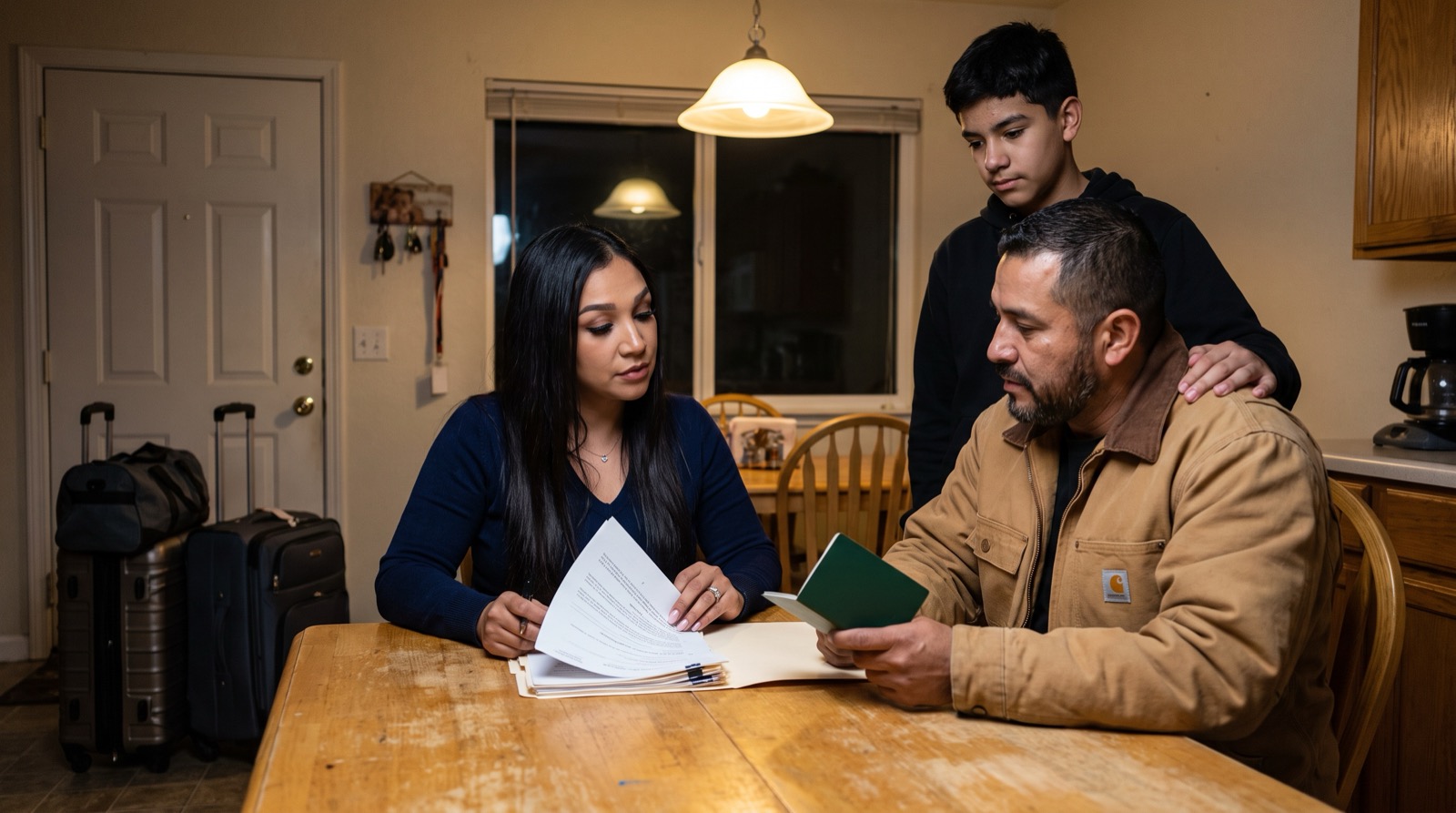
At a glance (120 words): The judge gave you, or someone you love, voluntary departure: a set number of days to leave the United States on your own instead of being deported. The date is close, and you wonder what happens if you stay a little longer or file something new. On November 5, 2026, the Board of Immigration Appeals answered part of that question in Matter of Ontiveros-Diaz. A man who stayed past his departure date, then filed a motion to reopen his cancellation of removal case lost. Staying past the date triggered a 10-year bar on most relief, and the late motion could not erase it. Here is how voluntary departure works, what the deadline means, and what to do before it passes.
What Voluntary Departure Is
Voluntary departure is an agreement. You promise to leave the United States by a certain date at your own expense, and in return the government does not enter a deportation order against you, as long as you keep your promise. Leaving on time avoids some of the long-term consequences of a removal order.
Every grant comes with two things families often overlook:
- An alternate order of removal. The judge enters it at the same time. If the voluntary departure ends for any reason, that removal order takes effect.
- A warning about penalties. The judge must tell you what happens if you do not leave on time.
There are two kinds of grants:
- Early in the case (before the proceedings are finished). Up to 120 days to leave. You generally must ask for it early, concede that you are removable, give up other requests for relief, and waive your appeal.
- At the end of the case. Up to 60 days to leave. You must show at least one year of physical presence before the Notice to Appear was served, five years of good moral character, no aggravated felony conviction, and clear and convincing evidence that you have the means and intention to leave, which normally includes a valid passport or travel document.
The Bond: Five Business Days
When voluntary departure is granted at the end of the case, the judge must set a voluntary departure bond of at least $500. It has to be posted with the ICE Field Office Director within 5 business days of the order. You get it back after you prove you left on time.
Missing the bond deadline does not cancel your duty to leave by the departure date. If you also waived your appeal, the alternate removal order can take effect immediately. If you appeal to the Board, you must show the Board proof that you posted the bond within 30 days of filing the appeal, or the Board will not give you a new departure period.
What Happens If You Stay Past the Date
If you voluntarily fail to leave on time, the law imposes these consequences:
- A civil fine. The regulation presumes $3,000 unless the judge sets a different amount when granting voluntary departure.
- A 10-year bar on most relief. For 10 years you cannot receive cancellation of removal, adjustment of status (a green card from inside the United States), change of status, registry, or another grant of voluntary departure.
- The removal order takes effect. You are now someone with a final order of removal.
The 10-year bar is the one that hurts most. Many people who receive voluntary departure have U.S. citizen children or spouses, and adjustment of status or cancellation of removal is often the path they hoped to use later.
What the Board Decided on November 5, 2026
In Matter of Ontiveros-Diaz, a father of three U.S. citizen children had applied for cancellation of removal. The immigration judge denied it, finding his children would not suffer the level of hardship the law requires, partly because they would stay in the United States with their mother. On April 4, 2025, the Board dismissed his appeal and gave him 60 days to leave voluntarily, until June 3, 2025.
He did not leave. On June 17, 2025, two weeks after the deadline, he filed a motion to reopen with new evidence about his children: a new school education plan, an autism diagnosis, and post-traumatic stress after a dog attack.
The Board denied the motion for two reasons:
- The bar applied. Because he stayed past the departure date and filed his motion after it passed, he was barred from cancellation of removal for 10 years. He argued the bar should not apply because he was only adding evidence to the same application, not asking for new relief. The Board disagreed. The law bars “any further relief,” and reopening a case does not undo the violation that already happened.
- The evidence would not change the result anyway. The new records were similar to evidence the judge had already considered, and the children would still remain with their mother and keep their care.
This is a published precedent decision. It binds immigration judges across the country, including the judges who hear Northern Nevada cases.
Timing Is Everything
The decision turns on one fact: the motion was filed after the departure date. The regulations treat a motion filed before the deadline very differently.
- A motion to reopen or reconsider filed before the deadline automatically ends the voluntary departure grant, and the alternate removal order takes effect right away. But the 10-year bar and fine for failing to depart do not apply.
- A motion filed after the deadline does nothing to the departure period, and if the motion is later granted, the penalties stay in place. That is what happened in Ontiveros-Diaz.
- A petition for review in federal court also ends the voluntary departure grant when it is filed, and the penalties for failing to depart do not apply while the petition is pending. If you were granted voluntary departure at the end of your case, you can still avoid being treated as removed if you leave within 30 days of filing the petition and meet ICE’s proof requirements.
Each of these choices has tradeoffs, and filing anything turns on the alternate removal order. Make the decision with a lawyer well before the departure date, not after.
Narrow Exceptions
The penalties apply only if you voluntarily failed to leave. The Board has held that someone who, through no fault of their own, did not know about the voluntary departure order, or who was physically unable to leave, did not voluntarily fail to depart. There is also a statutory exception for VAWA self-petitioners when abuse or extreme cruelty was at least one central reason they stayed past the date. Both are narrow and require evidence.
Only ICE can extend the time to leave, and never beyond the 60 or 120 days the law allows in total. An immigration judge cannot grant an extension.
What to Do If You Have a Voluntary Departure Date
- Find your exact date. It is in the judge’s order or the Board’s decision.
- Post the bond on time if one was set: within 5 business days of the judge’s order.
- Keep your passport or travel document current and plan the trip early.
- If you think you have a new reason to stay, such as a new family petition or new evidence, talk to an immigration attorney right away. Whether to file before the deadline is a decision with real consequences either way.
- When you leave, keep proof: boarding passes, the passport entry stamp in your home country, and any form ICE asks for. You need that proof to get your bond back and to show you complied.
When to Call an Immigration Attorney
If you or a family member has a voluntary departure date, the time to get advice is now, while every option is still open. The Law Offices of Karen S. Monrreal in Reno handles deportation defense and motions to reopen. Call (775) 826-2380. Hablamos español.
Frequently Asked Questions
Is voluntary departure the same as deportation?
No. If you leave on time, you leave without a removal order. But every grant includes an alternate removal order that takes effect if the voluntary departure ends, including when you stay past the date.
How long do I have to leave?
Up to 120 days if voluntary departure was granted before your case was finished, and up to 60 days if it was granted at the end. The exact date is in your order.
Can the immigration judge give me more time?
No. Only ICE can extend the time to depart, and the total can never be more than 120 or 60 days.
What is the penalty for staying past my voluntary departure date?
A civil fine (presumed to be $3,000 unless the judge set another amount) and 10 years of ineligibility for cancellation of removal, adjustment of status, change of status, registry, and voluntary departure. The removal order also takes effect.
Can I fix it by filing a motion to reopen after the date passes?
According to Matter of Ontiveros-Diaz (November 5, 2026), no. A motion filed after the deadline does not remove the 10-year bar, even if it only adds evidence to an application you already filed.
What if I file the motion before the deadline?
Filing before the deadline ends the voluntary departure grant and puts the removal order into effect, but the penalties for failing to depart do not apply. Talk to an attorney before choosing this route.
Sources: Board of Immigration Appeals, Matter of Ontiveros-Diaz, 30 I&N Dec. 222 (BIA November 5, 2026), justice.gov; INA § 240B, 8 U.S.C. § 1229c; 8 C.F.R. § 1240.26, ecfr.gov; Matter of Zmijewska, 24 I&N Dec. 87 (BIA 2007); Dada v. Mukasey, 554 U.S. 1 (2008).
This article is general information, not legal advice. Whether voluntary departure is right for you, and what to do before your departure date, depends on your history and your case. Speak with an immigration attorney about your own situation.
Questions about your own case?
This guide is general information, not legal advice for your situation. New clients are taken from a waiting list. Call the office to ask about current availability.