
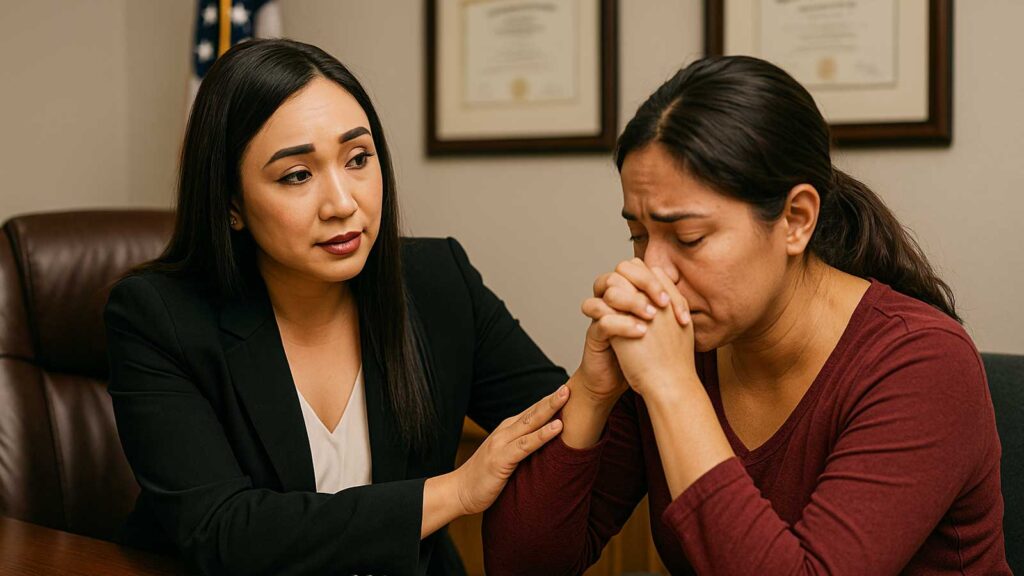
The U visa is a powerful immigration benefit for victims of serious crimes who have suffered significant harm and are willing to assist law enforcement in the investigation or prosecution of the crime. It provides protection from deportation, legal work status, and even a path to permanent residency. For many immigrants, it offers a new beginning built on safety and justice.
This post explains what a U visa is, who qualifies, the benefits it offers, and how the application process works.
What Is a U Visa?
Created in 2000 under the Victims of Trafficking and Violence Protection Act, the U visa is intended to:
- Offer protection to victims of certain serious crimes
- Encourage victims to cooperate with law enforcement without fear of immigration consequences
It is particularly helpful for undocumented individuals who might otherwise be afraid to report crimes.
Benefits of a U Visa
Applicants who are granted a U visa may be eligible for:
- Up to 4 years of legal immigration status
- A work permit (Employment Authorization Document)
- The ability to apply for a green card after 3 years
- The option to include certain family members as derivative beneficiaries
- Protection from deportation
- Access to limited public benefits
These protections create real security for people who have suffered trauma and fear.
Who Qualifies for a U Visa?
To qualify, you must meet all of the following requirements:
1. You Were a Victim of a Qualifying Crime
These include crimes such as domestic violence, sexual assault, human trafficking, kidnapping, rape, stalking, and more. A full list is available from USCIS.
2. You Suffered Substantial Physical or Mental Abuse
The harm can be physical, emotional, or psychological. Evidence from doctors, therapists, or your own personal account can help demonstrate this.
3. You Were Helpful to Law Enforcement
You must have helped or be willing to help police or prosecutors in the investigation or prosecution of the crime. This cooperation must be confirmed through a certification from a law enforcement agency.
4. The Crime Took Place in the U.S. or Violated U.S. Law
The U visa applies only to crimes that occurred within the U.S. or are subject to U.S. jurisdiction.
5. You Are Admissible to the U.S. or Eligible for a Waiver
If you have prior immigration violations or other issues that would make you inadmissible, you can apply for a waiver using Form I-192.
The U Visa Application Process
Applying for a U visa requires multiple steps and strong supporting documentation.
Step 1: Obtain Law Enforcement Certification (Form I-918 Supplement B)
A qualifying agency, such as a police department or prosecutor’s office, must sign Form I-918B to confirm your cooperation. This form is required to apply.
Step 2: Complete Form I-918 and Prepare Evidence
You will submit:
- Form I-918
- Law enforcement certification (Form I-918B)
- A detailed personal statement
- Evidence of harm, such as medical records or therapy reports
- Supporting documents like police reports, court files, or letters from witnesses
Step 3: Submit Form I-192 (If Needed)
If you need a waiver of inadmissibility, file Form I-192 with your U visa petition.
Step 4: Receive a Bona Fide Determination and Work Permit
If USCIS finds your application credible and complete, they may issue a bona fide determination and grant you a work permit while your case is pending.
Step 5: Wait for a Final Decision
Because only 10,000 U visas are issued each year, there is often a long wait time. While waiting, applicants can remain in the U.S. legally and continue renewing their work permits.
U Visa Derivatives: Family Members You Can Include
If you are approved for a U visa, you may also petition for certain family members:
- Spouse
- Unmarried children under 21
- Parents (if you are under 21)
- Unmarried siblings under 18 (if you are under 21)
You must file Form I-918, Supplement A, for each derivative.
Common Challenges
Some of the most frequent obstacles applicants face include:
- Difficulty obtaining law enforcement certification
- Proving substantial harm
- Delays due to USCIS backlogs
Working with a knowledgeable immigration attorney can greatly improve your chances of success.
Why Legal Representation Matters
U visa cases are deeply personal and legally complex. An immigration lawyer can help:
- Advocate for your law enforcement certification
- Prepare a strong personal statement and evidence package
- Navigate waivers and any inadmissibility concerns
- Monitor your application and respond to any requests from USCIS
At Monrreal Law, we’re committed to helping victims of crime find protection, healing, and long-term stability through the U visa process.
The U visa is not just a legal benefit. It’s a chance to reclaim your voice, protect your family, and move forward. If you or a loved one has suffered a serious crime, we encourage you to contact Monrreal Law today. You don’t have to go through this alone.