
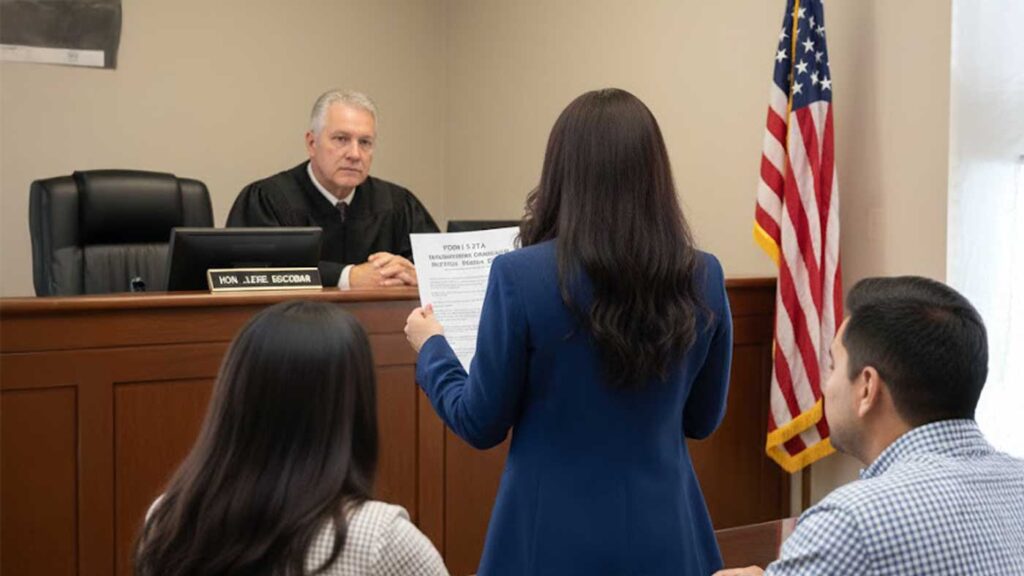
At a glance (120 words): An ICE detainer is a request from ICE to a local jail to hold a person for up to 48 hours after the jail release time so ICE can take custody. A detainer is not a judicial order and does not by itself require a jail to keep you. A judicial warrant is signed by a judge and authorizes entry or arrest. An administrative immigration warrant (Forms I-200 or I-205) is signed by a DHS officer, not a judge, and does not authorize entry into a home without consent. If a loved one faces a detainer, track the release clock, confirm custody with ICE ERO, and prepare a bond or parole plan. Do not sign forms you do not understand. Speak with an attorney before any statement.
Key points:
- Detainer = request, not a court order.
- Judicial warrant authorizes entry and arrest, administrative immigration warrants do not.
- Document the timeline around the scheduled jail release and any hold.
- After ICE pickup, ask about bond or parole and prepare a sponsor package.
- Keep copies of all forms: I-247A, booking sheets, release time, custody transfer.
What is an ICE detainer?
An ICE detainer, often Form I-247A, asks a jail to notify ICE before release and to hold the person up to 48 hours after the scheduled release time. Some jails honor detainers, others do not. A detainer is not a judge’s order. Families should track the jail’s posted release time and document any extra hold with names, times, and receipts.
Warrants explained
- Judicial warrant: Signed by a judge or magistrate. Authorizes entry or arrest consistent with the warrant terms.
- Administrative immigration warrants (I-200/I-205): Signed by DHS. Useful to ICE for immigration custody, but they do not authorize home entry without consent.
If officers come to a home, ask to see a warrant through the window or under the door. You do not have to open the door unless there is a judicial warrant that authorizes entry.
48-hour holds and timing traps
- Confirm the scheduled jail release time based on local charges or bail.
- If a detainer is lodged, note the start time of the hold and track every hour.
- If the hold exceeds 48 hours after the scheduled release time, document it and contact counsel immediately.
If your loved one is in a local jail with a detainer
- Request copies of the I-247A, booking sheet, and projected release time.
- Ask jail staff about detainer procedures and pickup windows.
- Call the ICE ERO field office to confirm who will take custody and where.
- Prepare a sponsor package in case of bond: proof of identity, address, housing, transport to court, and community support.
After ICE pickup: bond or parole
- Bond: Ask about eligibility and the process for a bond redetermination with the Immigration Court.
- Parole: For arriving cases, submit a parole request to ERO with a release plan and sponsor proof.
- Keep all receipts and notices. Save the I-203 custody transfer form if available.
What to say, what to sign
- “I choose to remain silent. I want to speak with my lawyer.”
- Do not sign forms you do not understand. Ask for copies of everything.
- Avoid detailed statements about immigration or criminal history without counsel.
Evidence to gather and how to track the timeline
- Copies of the detainer (I-247A), administrative warrants (I-200/I-205), and jail release time records.
- Logs of calls, names of staff, and time-stamped notes or photos of paperwork.
- Identity and address proof, sponsor letter, work or school records, medical letters.
Common mistakes
- Assuming a detainer is a court order.
- Failing to record the release time and the 48-hour window.
- Signing stipulated removal or other forms without counsel.
- Waiting to prepare a bond or parole plan until after transfer.
Helpful links
- ICE – Enforcement and Removal Operations (ERO): ice.gov/ero
- ACLU – Know Your Rights on immigration enforcement: aclu.org
- Local help and bond planning: Monrreallaw.com – Immigration Services
This article is general information, not legal advice. Detainer policies vary by jail and jurisdiction. Speak with an attorney about your facts.